

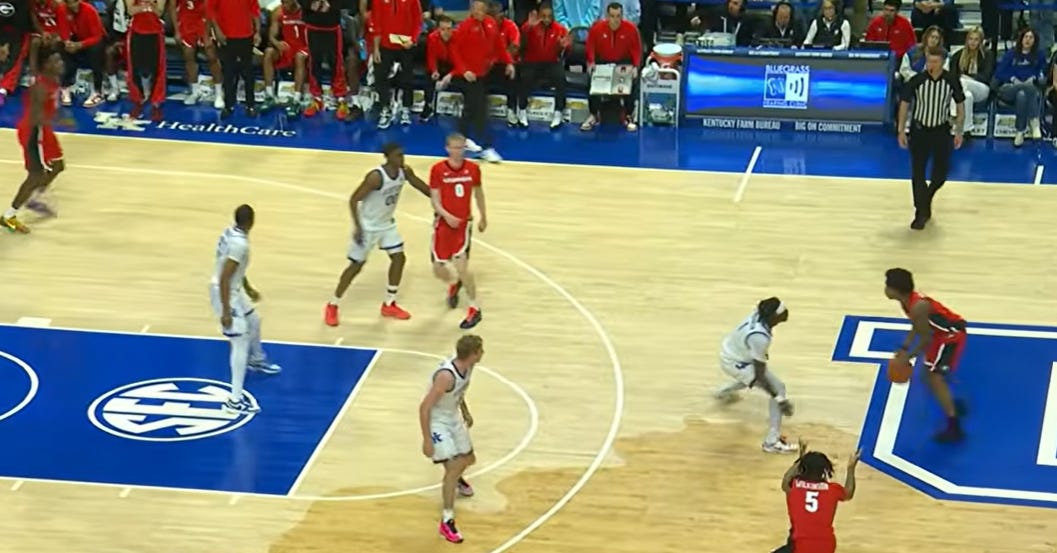
Justin Gainey’s history as a basketball coach is defined by his development of the Tennessee defense under Rick Barnes. When he was hired at NC State, it seemed a given that he would bring in someone who held a similar role to his, but on the offensive side, to help build the offensive identity of this group. That was Anthony Goins, who led the charge for a Georgia offense that racked up the points in a league full of tough defenses.
I took a look at two games from the Georgia offense last year and put together some thoughts and details on the product we might see this year for NC State.
Caveats
This is what Anthony Goins did last year. That doesn’t mean it’s exactly what Anthony Goins will do this year under a different head coach with different players. This could all be rendered useless on night one.
I did not watch every Georgia basketball game, so sampling error is in play.
Terms to know
Pick and roll: A catch-all term for actions where a screen is set for the ball handler to use and attack the paint
DHO: A handoff action that functions as a ball screen
Zoom action: A 5-out handoff action where the receiver runs through a wide pin screen before receiving the handoff
Ram screen: A screen for an off-ball player who will then go set a ball screen
Veer screen: A ball screen where the screen will then immediately set an off-ball screen.
Shake pick and roll: A variant of pick and roll where the off-ball player in the corner will relocate to the wing as a way to stress help (roller tag) out of that corner
Anthony Goins headed up a Georgia offense in 2025-26 that ran at the red line, occasionally overheating. It played fast, it was aggressively shooty, and it was 21st nationally in adjusted offensive efficiency. The Bulldogs were 82nd in the country in three-point attempt rate, a modest 183rd in three-point percentage, and 10th in pace. The volume of three-point shots out of actual actions was probably higher, but Georgia was a good offensive rebounding team as well, which led to putbacks. There were 11 games where Goins’ offense shot over 30 triples.
This team was swimming in green lights. Georgia had four players clear 150 attempts from three, and Jeremiah Wilkinson hoisted 221 triples by himself. Goins’ offensive approach was very modern in structure, with spacing as the cornerstone, a high volume of pick-and-roll, and a lot of components of actions designed to stress help. It is obvious why State valued players like Paul McNeil, Christian Hammond, Preston Edmead, and Eemeli Yalaho. I’m not saying these guys are only shooters, but that was the carrying trait for each in 2025, and each can be used as a tool to create stress on help defense with a +38% three-point shooting mark.
In the halfcourt, this offense isn’t overly complicated. It’s heavily reliant on spacing and high-level guard creation, and it seeks to create space for its guards to attack through various ball screen and DHO actions, with a good list of fun add-ons to manipulate help defense and enable its players to win. This type of offense is the air raid of basketball. It is simple in nature, it is repeatable, it is players over plays, and if run well with good players, it is explosive and hard to defend.
First and foremost, pace and aggression is everywhere. Georgia is looking to attack the rim early in possessions. If it can do that without needing an action or with a simple drag screen, Goins will be happy.
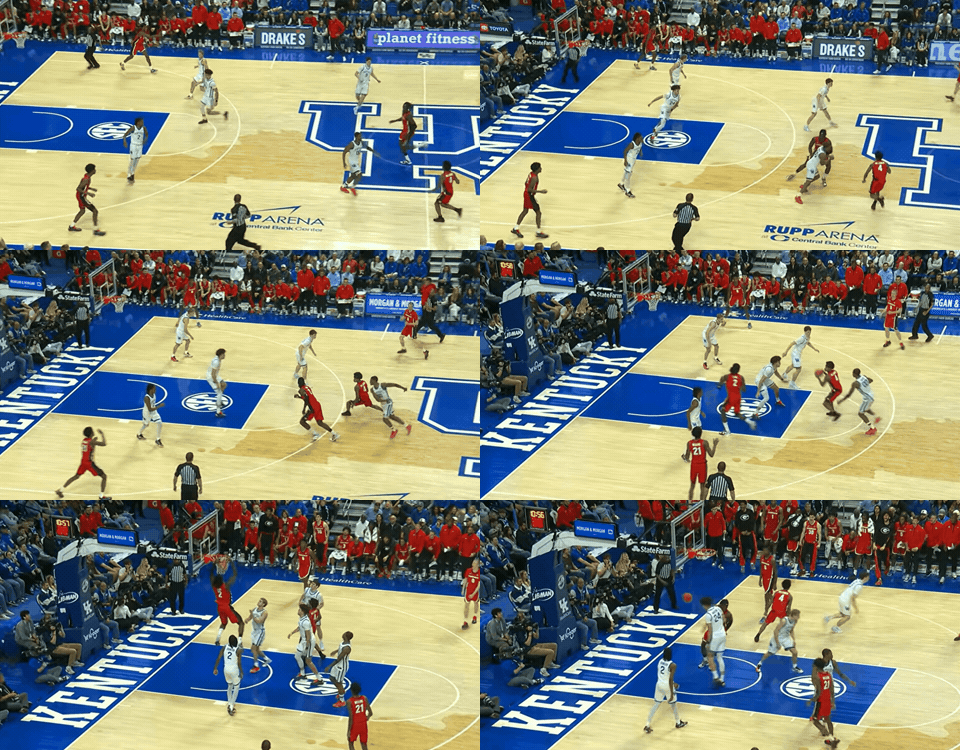
Here is a late transition drag screen from Georgia. Goins’ unit was always looking to attack early. Kentucky is disorganized here and Georgia gets an easy lob from a bad defensive possession.
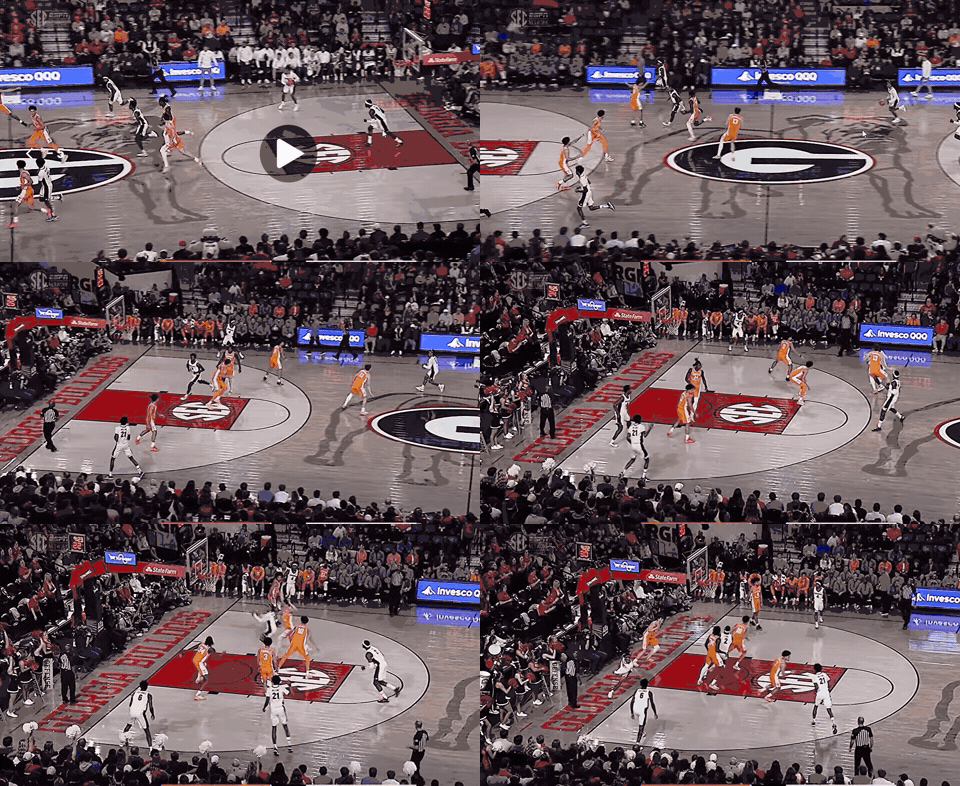
Here is another late transition bucket from Georgia. Tennessee’s JP Estrella is picking up the big as he comes up the floor, but a miscommunication forces him onto the ball as nobody picks up the ball handler. Jeremiah Wilkinson immediately attacks the plus matchup, wins, and scores.
When it comes to the halfcourt offense, you get a fair amount of spread ball screen and empty side ball screen from the Bulldogs, and they commonly flow into other 5-out actions from there if forced to reset. Everything here is about opening space for your creators and allowing them to attack. Georgia uses a lot of off-ball cutting to manipulate help and create additional space for its primary creators.
The shooting gravity of guys like Paul McNeil and Christian Hammond adds juice to these types of movements, because you can’t lose those guys. These two possessions below give you a nice look at some basic actions, the use of off-ball cutting, and some good and maybe less good decision-making.
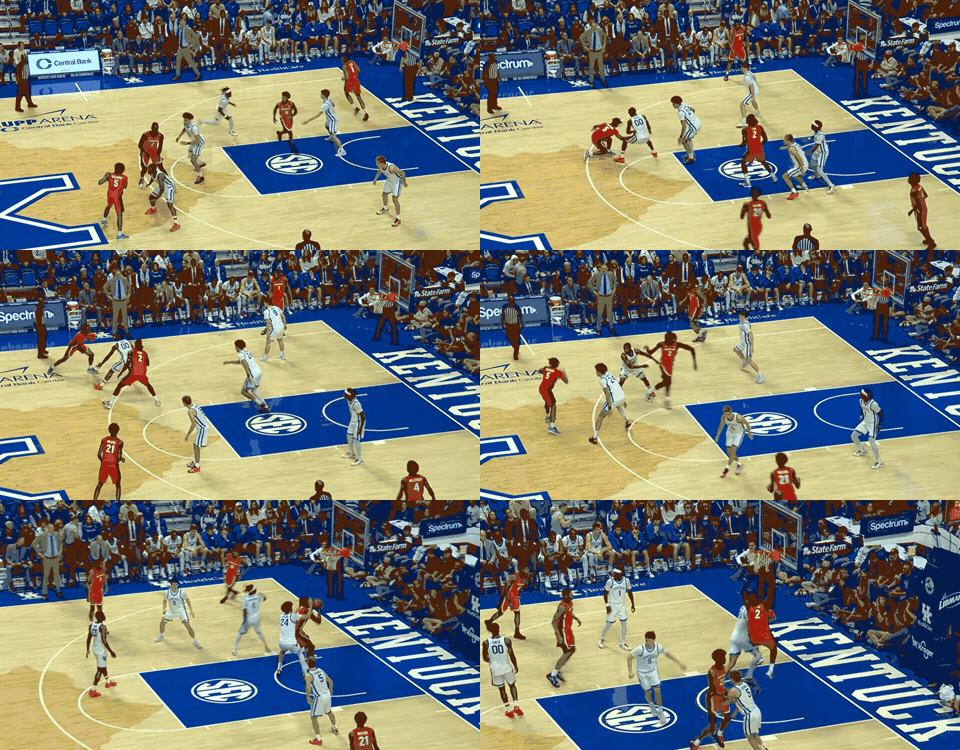
Georgia gets into a spread ball screen here and uses the corner cut to create the double gap. A good rotation from Kentucky forces the reset. Georgia resets and runs a shake pick-and-roll to attack Kentucky’s soft hedge coverage. Wilkinson kicks the ball back to Kareem Stagg (1), who has relocated to the wing (this is the “shake” part of the action). This little movement is built to challenge the help out of the corner when it has to rotate to the ball during the hedge. Good passing here gets the ball ahead of Kentucky’s defensive rotations. 4’s cut to the opposite corner puts his defender in an awkward spot. He swipes at the ball but isn’t in a position to do anything else.
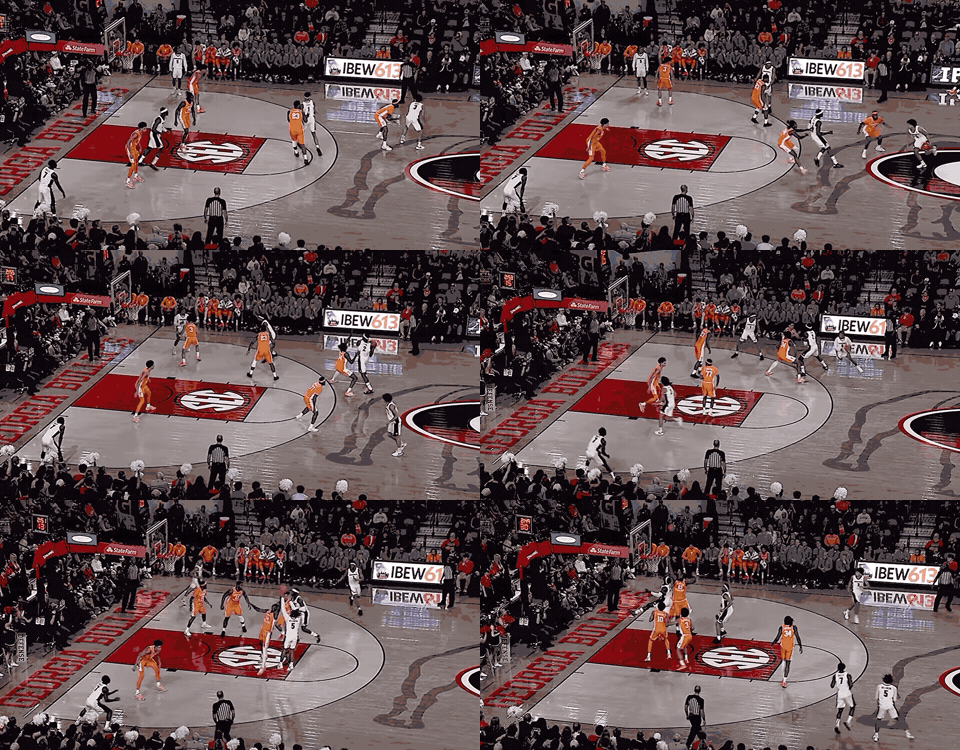
Georgia starts this possession with a step-up spread pick and roll. Expecting a hedge, the screener will slip to the slot area. When no advantage is created, Georgia flows right into a zoom action and 3 clears to the opposite corner to create a double gap for the handoff to attack. Tennessee does a decent job switching this, but you can see how much space the DHO comes into. The shot selection here isn’t great.
This is the read-and-react element at play with a good movement sequence from Blue Cain as Georgia flows into the zoom action.
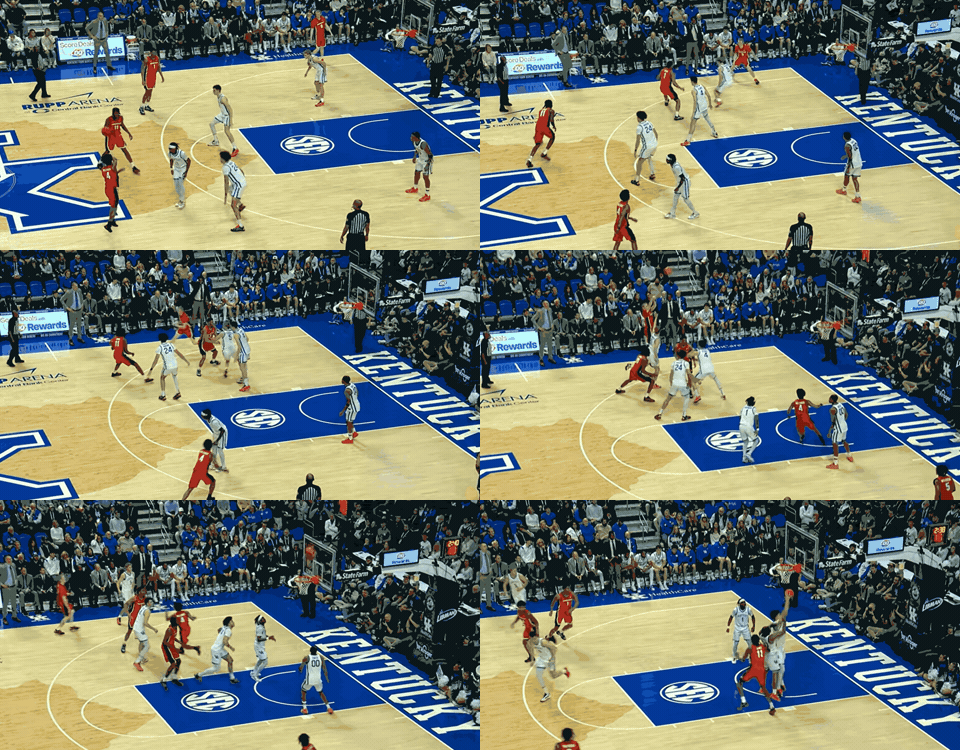
Again, Georgia runs the zoom action and corner cuts from the opposite wing to create the double gap. Blue Cain, who the action is run for, tries to basket cut when Kentucky denies the screen. When he doesn’t beat 5 with the cut, he reverses it back over the wide pin screen. 5 gets caught under the screen because he chased the basket cut, so Cain fades the screen and gets an open triple. It doesn’t impact the play here, but you can again see the corner cut from 4 that was designed to create that space (double gap) had Cain come hard off the handoff.
One of the enablers of series-based possessions like some of the ones above is the presence of multiple creators. Wilkinson was the number one for Georgia, but you can see them flowing into secondary actions for other guys. I like to think that State has this in guys like Darius Adams, Christian Hammond, and Paul McNeil. Each comes with questions when it comes to any kind of on-ball role, but there is certainly potential. Adams had a good game playing a lot of minutes in the exhibition. Hammond isn’t an elite athlete, but I like him as a secondary guy who can operate out of the corner and be the subject of a secondary handoff or zoom action.
Goins of course has his bag of various counters, extensions, and adjustments to attack certain defensive profiles. I didn’t clip it, but you see the veer screens on tape that Will Wade ran every game for Paul McNeil. It’s a fantastic enabler for a movement shooter like McNeil, and if he can become more of a downhill playmaker, that only elevates it.
This is a fun one. Here is “Ram Spain.”
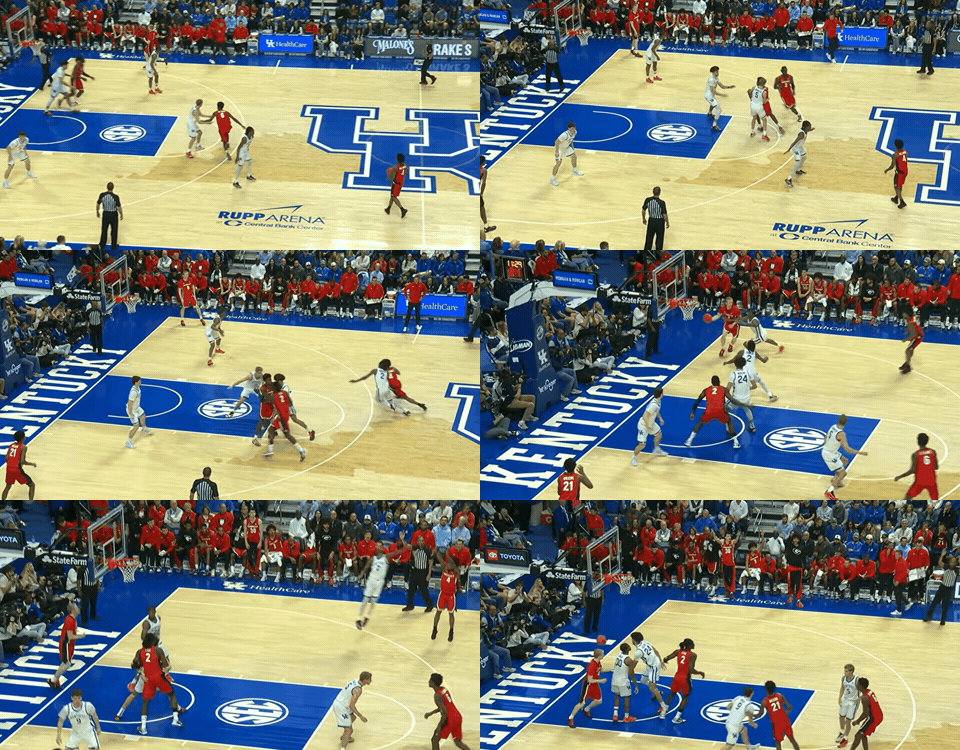
First, you get a ram screen for Somto Cyril (2), who becomes the ball screener. This can delay the defensive big’s arrival at the screen, which can affect all sorts of elements of the play depending on the coverage. That is the “ram” part. After the ball screen takes place, the ram screener (Kanon Catchings, 6) flips and back screens for the roller, which is the “spain” part. Wilkinson creates the advantage off the screen while the big recovers fast and runs right into the guard’s screen. Kentucky’s guard then drops into the charge circle to protect on the roll. Wilkinson being able to turn the corner forces the help from 00 (didn’t know you could have this number) and a little two-man game ensues.
This is a player enablement offense. The Georgia guards had shining green lights to attack and to shoot the ball. On-ball guard play will be critical to enabling all of the juicy pieces here. Spacing is also critical, but that’s the element of this team I feel the most confident in. Shooting shouldn’t be an issue. There is too much history of high-end perimeter shooting.
Ven-Allen Lubin and Kyle Evans should both have “serviceable” as their floor when it comes to pick-and-roll bigs. Lubin could be in for a big season, and he’s a storyline I’m interested in following in this offense, which may adjust to enable him further.
The ceiling of this unit comes down to State’s guards and their ability to create paint touches and present a legitimate interior scoring threat. The fundamental issue that must exist for defenses in a ball screen situation is pressure being put on the rim.
Preston Edmead is impossibly entertaining, and he can generate a paint touch, but he was an inefficient scorer inside the arc last year. Darius Adams has the physical tools, and he made some waves in the exhibition. Obviously, he’ll need a major jump in efficiency from his freshman season. What does Paul McNeil have as a creator this year? Christian Hammond isn’t a natural advantage creator, but he’s flashed some playmaking in DHO and zoom actions.
State needs that next step to take this thing over the top and make defenses wrong at a high clip. If Darius Adams and Preston Edmead are your top two creators, they’ll need to shoot better than a combined 42% from two. But if you get that step from them, it’s hard to see how these pieces in this offense don’t lead to something good.