

It is not the headline, and it very obviously should not be, but not every part of the Wolfpack’s trip to Charlottesville was worth throwing in the trash can. It’s been discussed in many places that NC State got nuked by the quarterback run game, but was actually pretty effective against the running backs. This is very much true. If you’re looking for positives at this stage of the season, State did some good things on the defensive line in game one, specifically against the traditional run game. It also did some bad things. This was not an A effort. But while Beau Pribula averaged over seven yards per carry, the five UVA backs that carried the ball averaged 3.5.
Scheme multiplicity is the most notable part of the DJ Eliot defense, and it did create some issues for the Virginia offensive line, even if it was ultimately forgettable because of everything else that happened. If you’re a listener of The Lotcast, you know that one thing we discussed in the preseason was the possibility of State using more movement on the defensive line to attack run concepts. This was indeed a part of the State run defense in the first game.
Movement, run stunts, reductions . . . these are all words that mean similar but slightly different things. When we use them here, what we’re talking about is defensive linemen fitting or attacking different gaps in the run game than they are aligned in presnap. The effects of this can be similar to a coverage disguise for a quarterback. It creates different front structures and different problems for the blockers, and it adds a layer of unpredictability that requires post-snap recognition. It also creates structural advantages against specific types of plays and can be used to attack offensive tendencies.
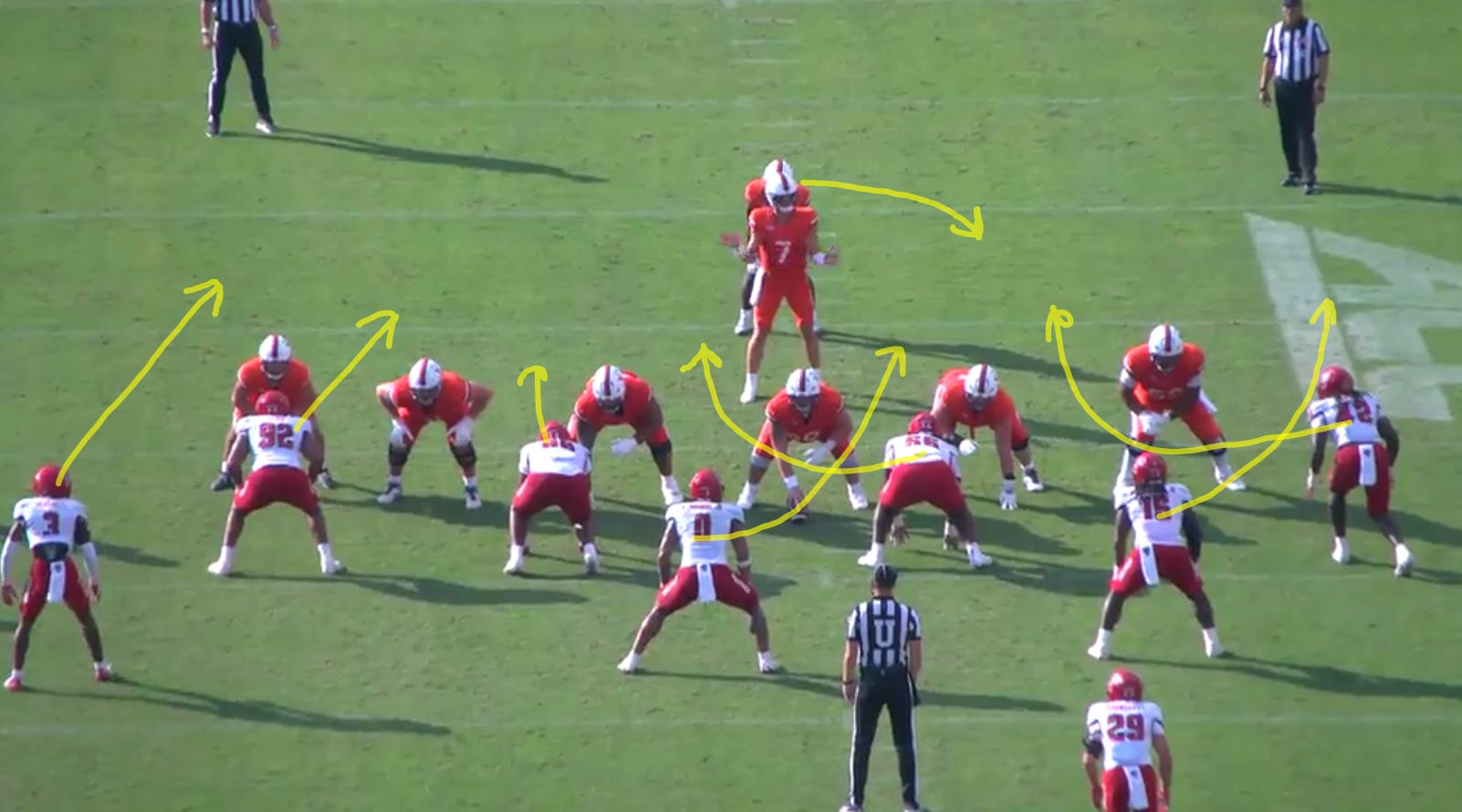
Let’s take a look at two examples, starting with this zone run early in the second half.
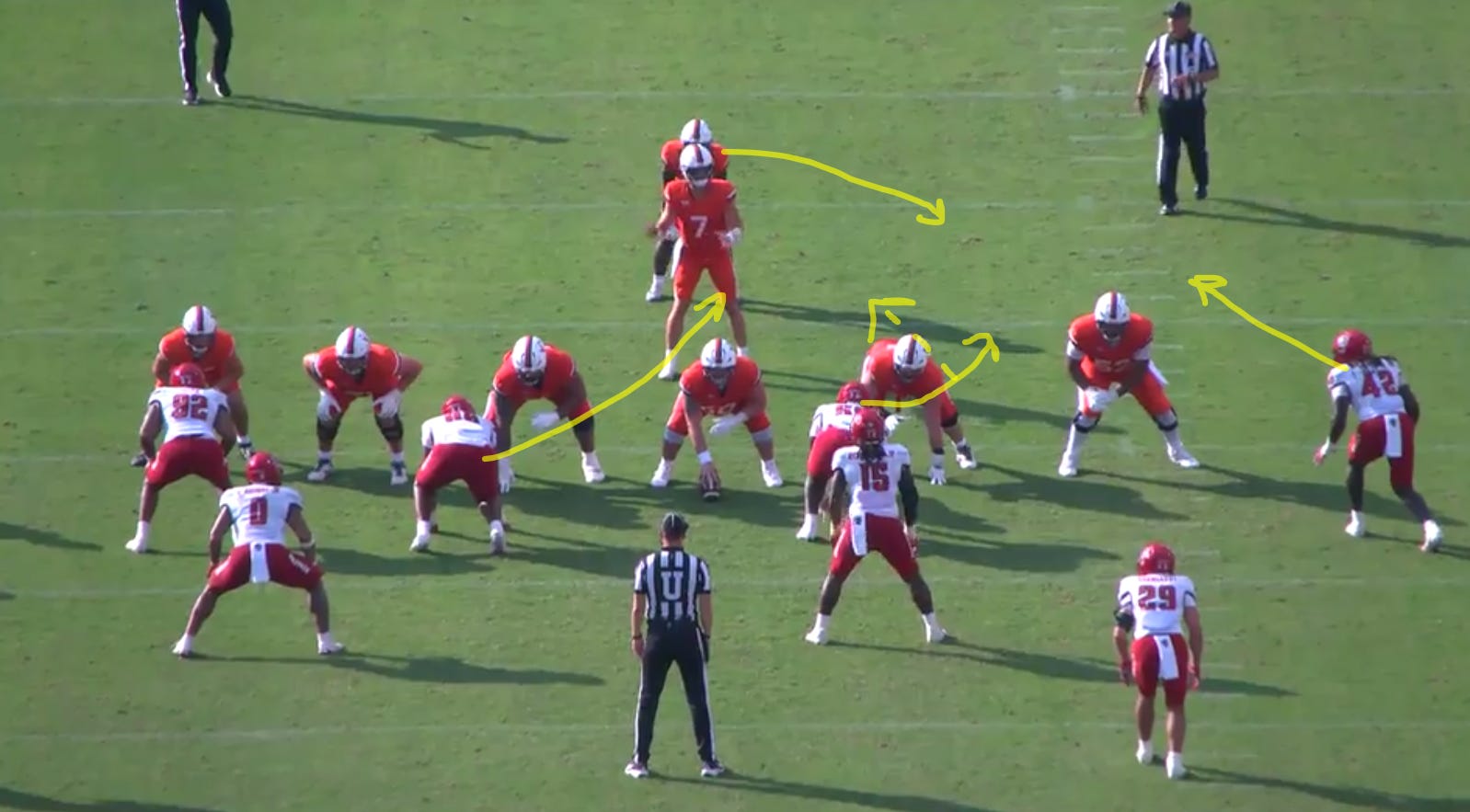
Virginia is going to run outside zone weak, which is to the offense’s left. State is going to execute what’s called a “blood stunt,” which shifts the strength of the defensive line via a simple movement from the interior. You can see this illustrated above, with both interior linemen working one gap over at the snap. This pushes the strength of the front from strong to weak and changes the front from an “over” to an “under”
Both Isaiah Shirley (88) and Omarion Abraham (56) are going to work one gap to their right at the snap. Abraham is going to be a two-gap player, which you can see illustrated on the above graphic. His job is to control the body of the guard, post up in his right-side gap, and be able to rip back into his left-side gap.
Isaiah Shirley is a one-gap player. His job is to get penetration right through the A gap, which you can see illustrated above too.
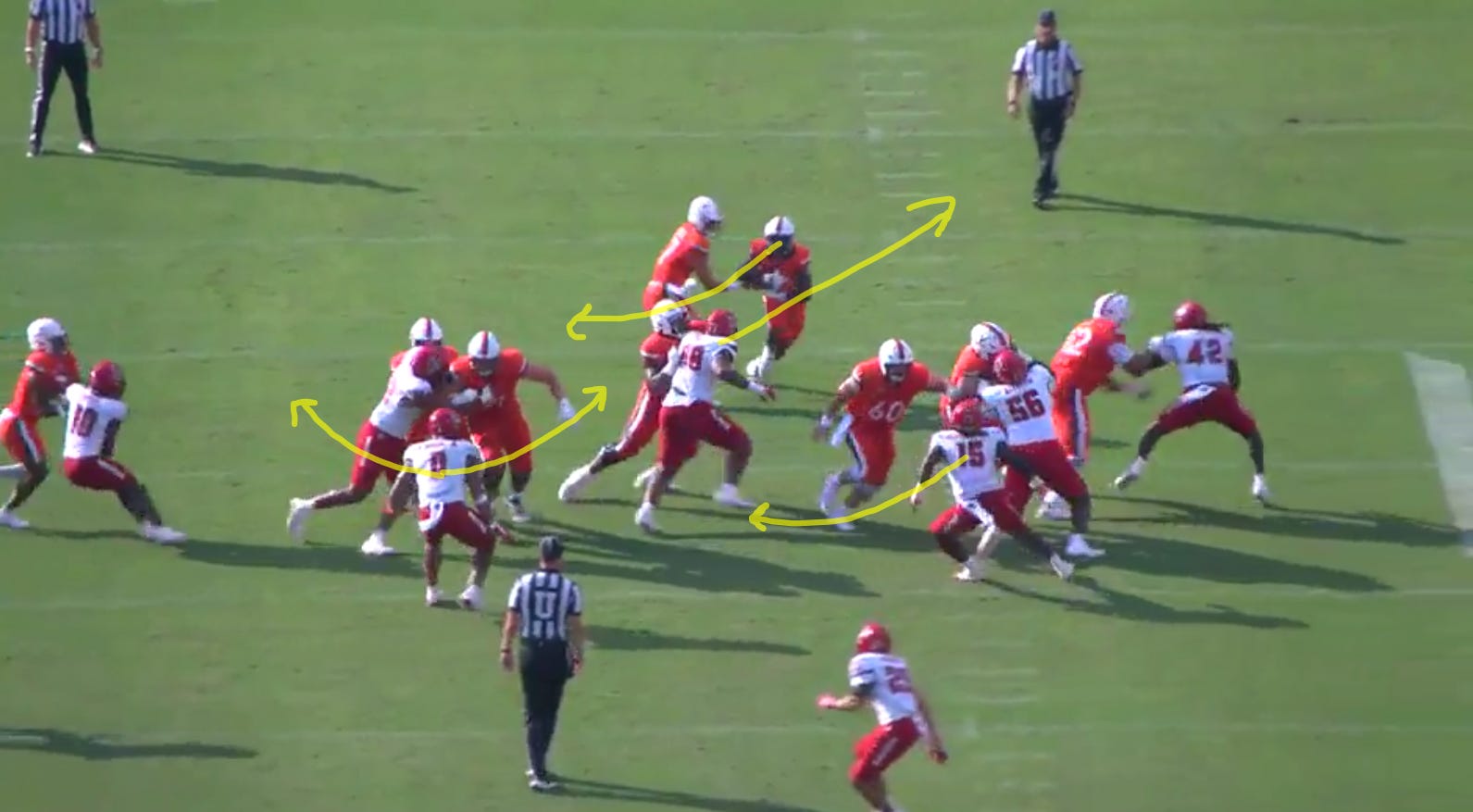
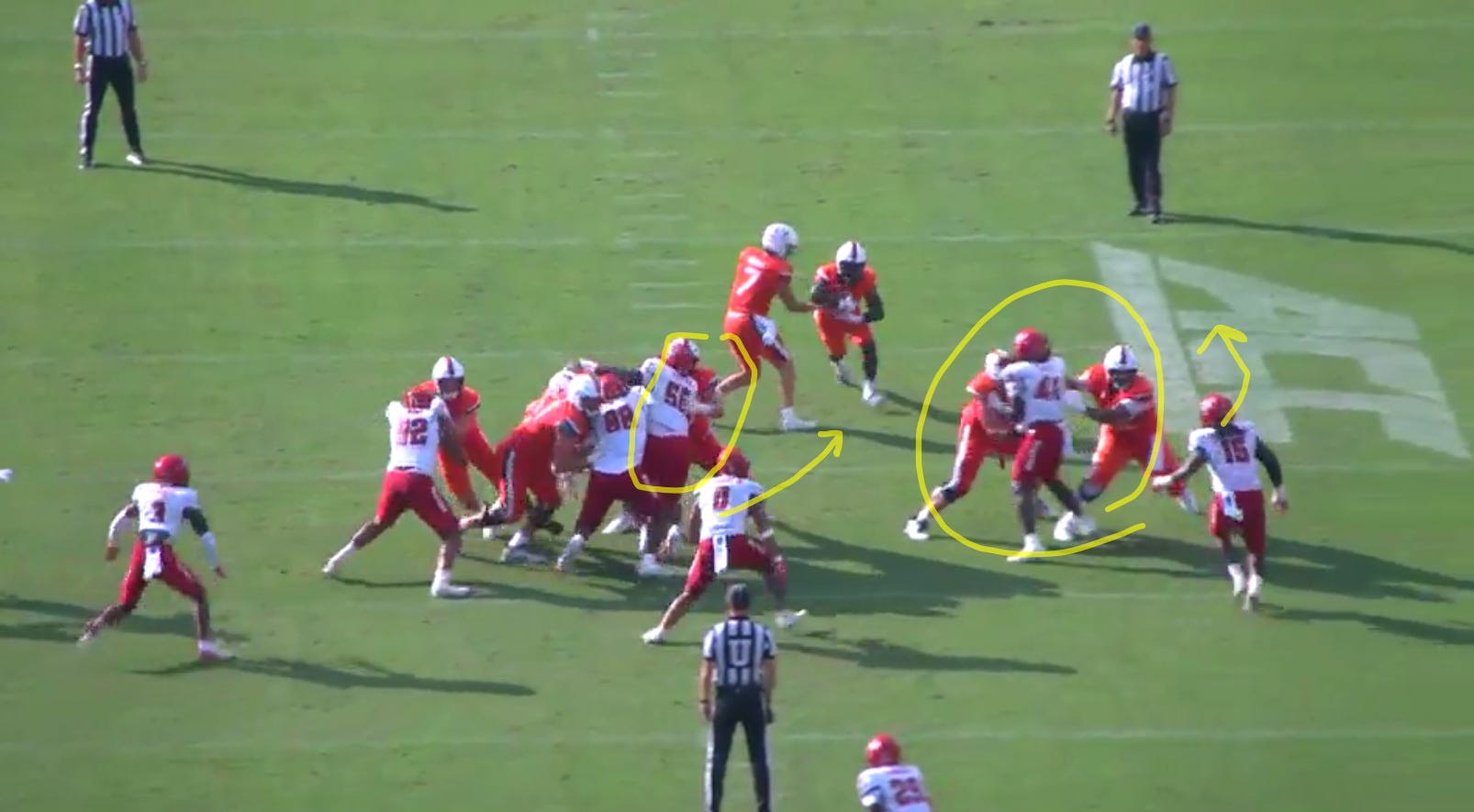
Here, you can see Shirley get penetration and Abraham post up in his frontside gap. The penetration is going to cut the ball off and force it to the backside. Remember, this play is ran to the offense’s left. When this type of movement works, it builds a wall on the frontside of the play and pushes the ball backside. The linebackers can fall back to the ball and make the tackle, and State will also insert a safety post-snap opposite the flow of the movement to even the numbers. This safety is ultimately who the defense is funneling the ball to.
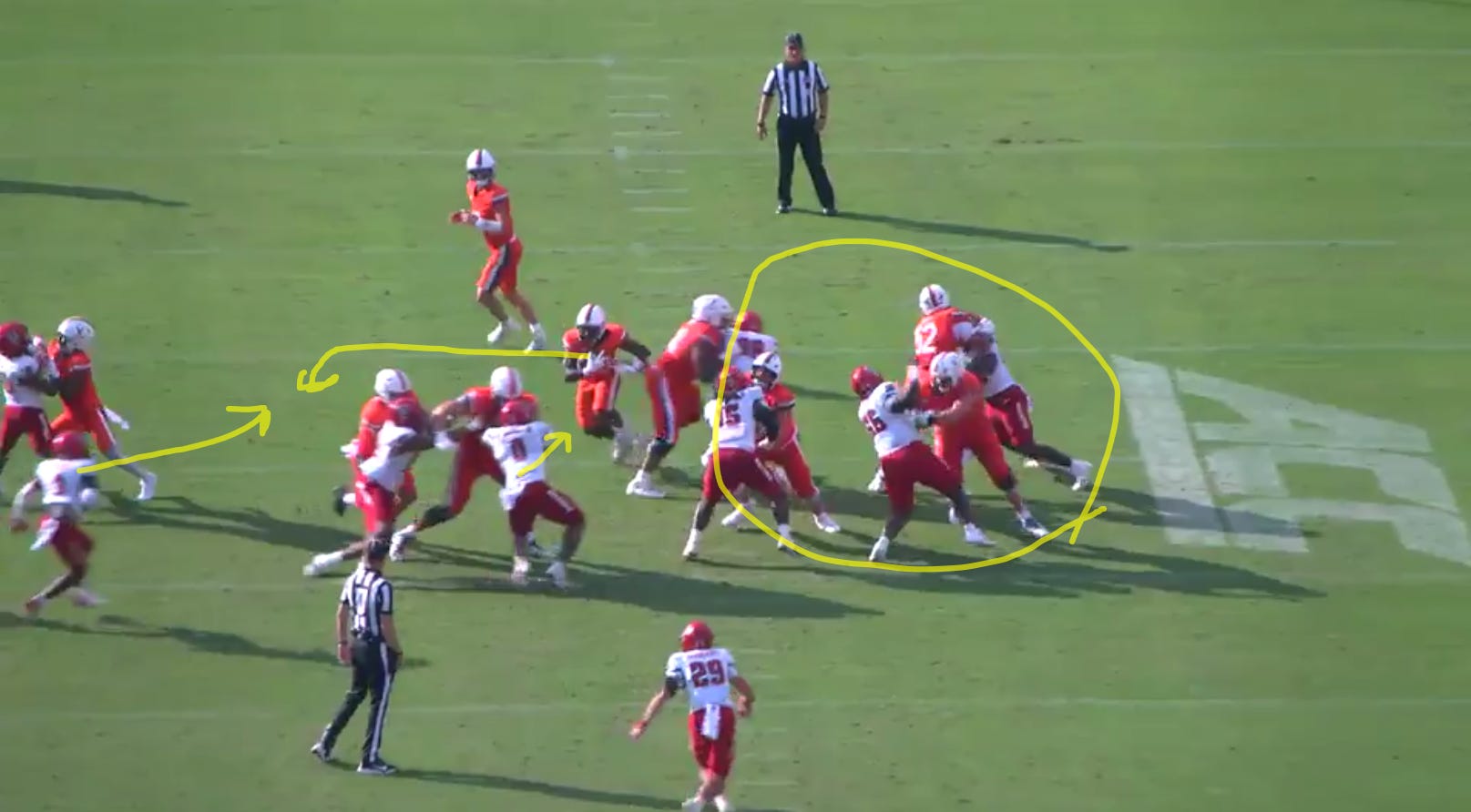
Above, you can see the wall. Richardson (15) has fallen back with the ball while maintaining leverage over the outside hip of the back. Aguirre (0) likely would have fallen back, but the double team on Chase Bond didn’t break and Bond did not get any penetration, so he stayed front side. On the far left of the screen, you can see Ronnie Royal inserting and making the tackle.
Here’s the full play in GIF form.
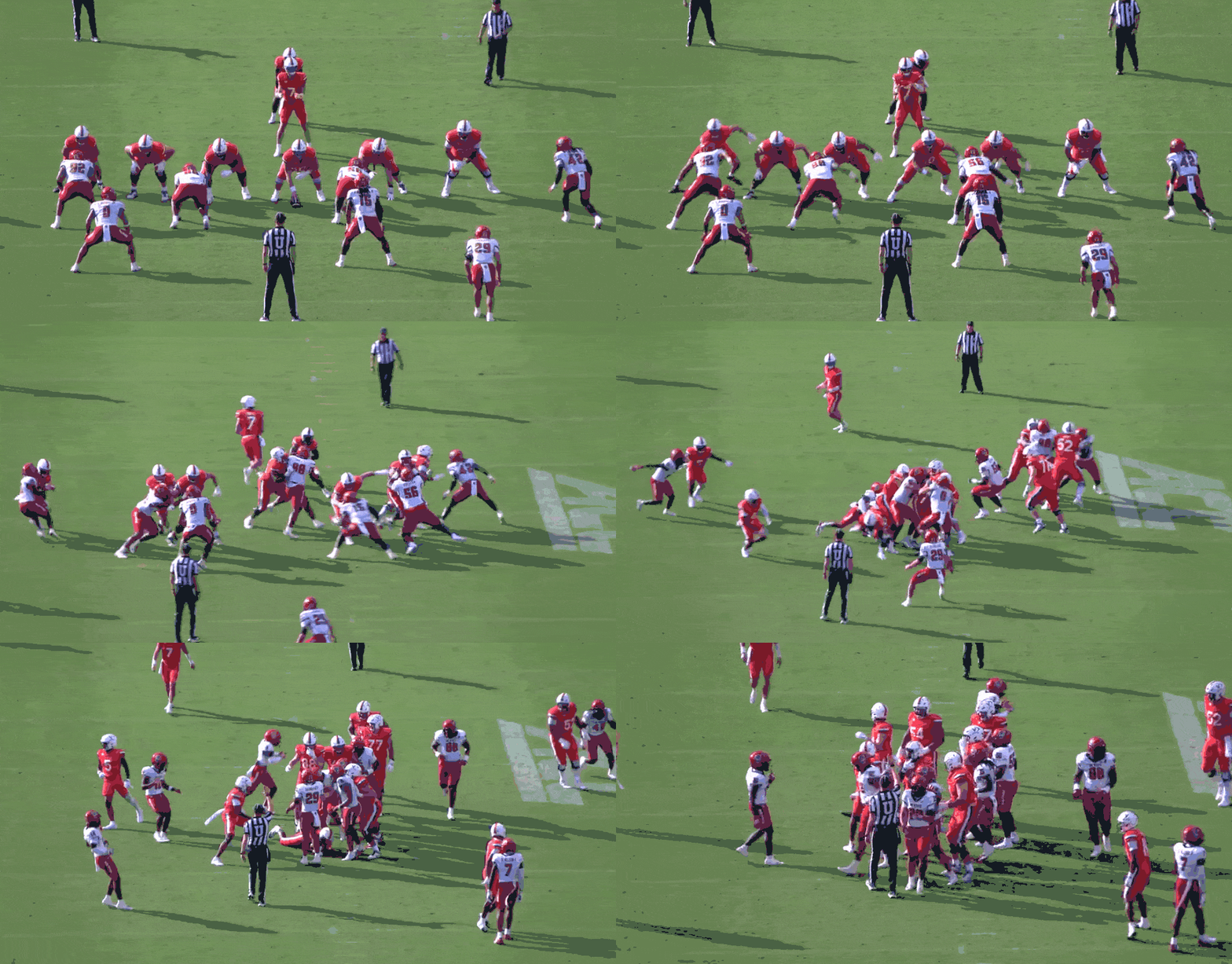
This fits well for State. If you pay attention to the back’s eyes, you can see him read across the line before cutting it all the way back. It gains six yards because Chase Bond was displaced on the backside and the RB was able to get vertical on the cutback. As stated, Virginia’s offensive line had plenty of wins.
The very next play, UVA ran a weak zone concept again, and NC State used a different kind of movement to cut it off.
Omarion Abraham (56) and Ke’Von Carter (42) will slant inside at the snap. The offensive linemen that these two players cross the face of will have to work against the flow of the play to pass these guys off and/or prevent penetration from the slant. This allows the linebackers to fill cleanly.
You can see the tackle and the center that had to work opposite the play. UVA handles this better on the edge than it does in the middle. Omarion Abraham does a fantastic job on this play, and his slant holds the center because the backside guard is not able to engage him cleanly. There is a lot of stress put on that guard here to recognize this, and the center gets left in a no-win situation as he tries to get eyes to Popo Aguirre. Richardson sets the edge and Aguirre fills the A gap that looks very enticing at first. There is nowhere to run.
Here’s the full play.
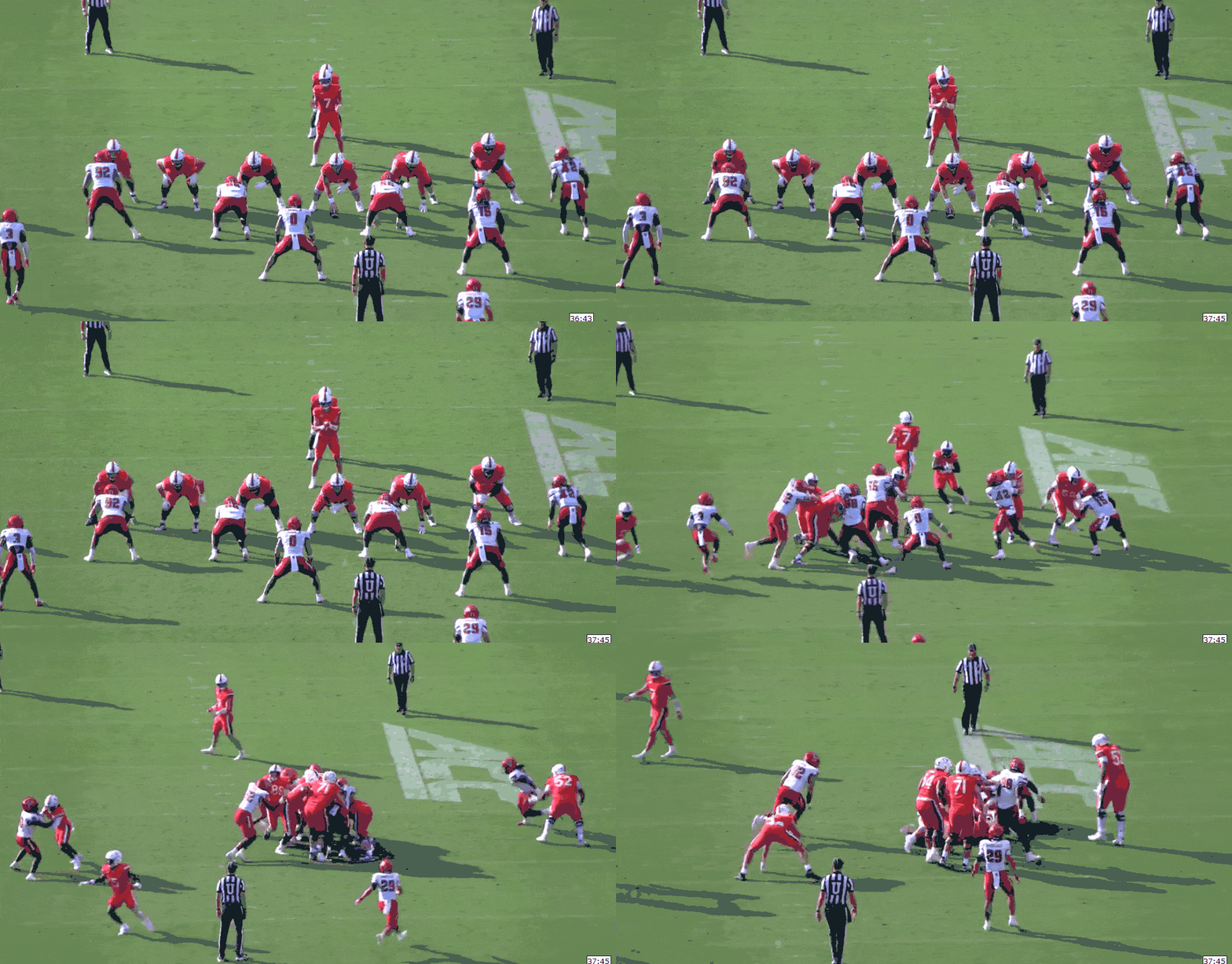
Abraham is so good here, but even if he doesn’t make the play, the ball has nowhere to go.
Run stunts haven’t been a big part of State’s defensive structure under Doeren, mostly because Tony Gibson didn’t use them often. These are simply scheme elements. They aren’t good or bad by default. But when they work, you can see how. The other advantage of using them is it makes the defense less predictable. State rotates through different fronts in both even and odd spacing, and the blood stunt is an example of changing your front structure post-snap.
Keeping the offense guessing has obvious advantages, especially when you’re undermanned. There is no question that Virginia’s offensive line was better than NC State’s defensive line, but the movement in the examples above can steal plays and be an equalizer in situations like that.