.png)
A Deeper Look at Justin Gainey's Defense
- AlecLower

- Apr 8
- 7 min read
We're about to go full steam ahead into covering the transfer portal, but before we get there, I wanted to go a little deeper into some of the tape of Justin Gainey's defense. Gainey brings with him a lot of question marks, but the two sure things about him are that he's a good cultural and he can coach some defense.
It's been discussed at length how Justin Gainey's defense guards the ball. If you can't guard, you can't play, as the man himself has said. The most fundamental aspect of defense is not getting beat off the dribble, and Tennessee does a good job of forcing actions to beat them. They make opponents manufacture shots and don't get broken down off the bounce like we saw too often this season with NC State. This is a strong point for Gainey.
Today, I wanted to focus more on the scheme side of things and some of the ways Tennessee tries to handle screening actions, where it was best, and how it's built its teams. One thing Pack fans will enjoy about Gainey’s defensive approach is the adaptability of it. Here are two quotes from the newly-minted head coach.
"How well do our guys move, and I'd also lump into that mobility of post players. That will determine how we're going to guard our ball screen actions."
"The last four years, we've been smaller at the point guard position, so we weren't able to switch as much as sometimes we would have liked to."
Gainey buys into the idea of matching the scheme to the personnel. Generally, you want to attack the roster building process with specific skills and bodies in mind to match what you want to do. Adaptability is ideal, but you have to start with a type. Gainey would like to have a team full of athletic giants, but type has to include offense too. You won’t get everything you want every year and you wouldn’t pass on an elite creating guard because he isn’t big enough to switch comfortably. So you adapt. The quote about switching is exactly this. Tennessee started a 6'1 point guard and a 5'9 point guard during Gainey's time on staff.
The key to being adaptable isn’t just having different things you can play. That’s very easy to do. It’s being good at multiple things, which is much harder. Will Wade played lots of different looks defensively, but his team was bad at all of them. Gainey's defenses were comfortable in multiple ball screen coverages and had the athleticism across the board to fare well in a switch situation. While there are definitely some things they could do more consistently, they are able to use different principles to attack different offenses and different situations.
Ball Screen Defense
The first thing I look at with any defense is how they want to guard screens. Screening is the fundamental action of basketball offense, and how a team wants to defend them will influence what kind of roster it builds, where its weak points will be, and ultimately what kind of shots it is more likely to allow. This year’s Tennessee team played two different ball screen coverages at a high volume, and it was very comfortable switching between them during games and even inside of individual possessions.
Drop coverage
At least the games I watched, Tennessee was great in their drop coverage. Drop coverage gets crapped on sometimes for being kind of the lowest end of ball screen coverage, but I like it at the college level for that reason. It’s easy to find personnel for and it’s less prone to unfixable busts during an action. Gainey’s defense was good at it and its size and length only made it better.

This is a good offense better defense situation. Felix Okpara was a good player for them, and you can see the type of athleticism Tennessee had.

Hedging ball screens
Tennessee also hedged ball screens a lot. It would play a lot of drop and hedge, often playing different coverages over the course of a single possession. I didn’t think it was quite as good at the hedge, at least in the games I was able to watch. When it gave up good looks at the rim, it was usually in this defense. Tennessee was generally good at everything it tried to do, and it certainly wasn’t bad at this, but they didn't look as consistent doing it.
This possession shows the basic coverage but also some great defensive awareness.

Below are some examples of how things would go sideways for the Vols.


Switching
Tennessee didn’t switch screens aggressively this year. Switching was typically a product of what Gainey calls “fix it plays.” It’s a term for defensive sequences that result from some sort of successful advantage creation from the offense, whether that is a pocket pass off a ball screen that puts the ball well ahead of rotation, a guard allowing himself to be screened, or any kind of defensive bust. I would not be surprised to see an uptick in switching this season, but the type of big State lands will probably give us that answer before the season starts.
Here's an example of a fix it switch.

Defeating screens
One of the most notable parts of the tape from Gainey’s defense is the ability of the guards to not get screened. A lot of modern offense in basketball can get reduced down to an attempt to create an advantage off a screen and then making a read off of how ever the defense reacts to that advantage. When you can eliminate the advantage entirely, it forces the offense into resets and secondary actions, and then ultimately late shot clock situations.

Contrast that with this gem.
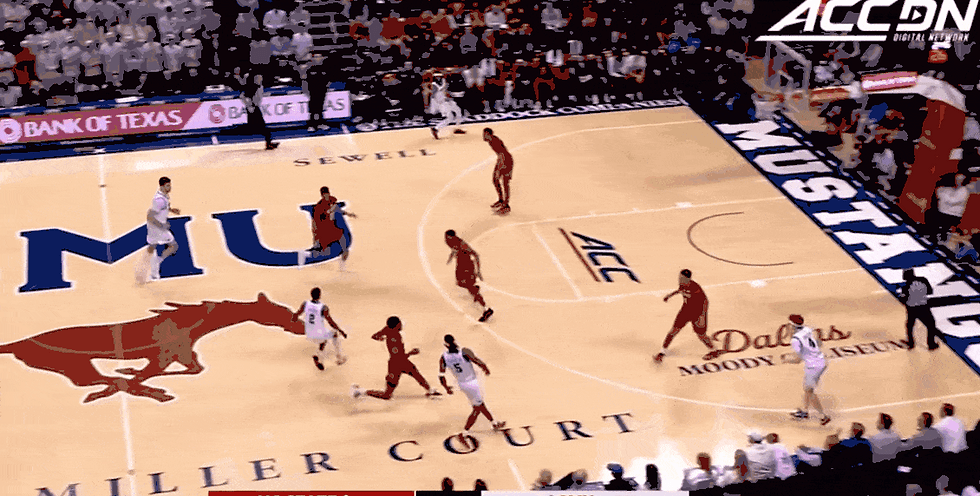
Every tendency has a counter, and Tennessee saw a lot of ball screen rejections and Verajao screens. Alabama had success getting paint touches out of these actions in the two wins against the Volunteers, and Texas A&M gave us a great example below.

A Big Old Team
Tennessee’s 2026 team was gigantic. The topic of size has certainly come up a lot with Wade’s small roster during his inaugural/final year in Raleigh. The Volunteers had eight players average over 10 minutes per game and five of them were 6’8 or taller. Three were 6’10 or taller.
Rick Barnes’ teams during Gainey’s time haven’t always been this big. Gainey’s second defense was actually on the smaller side, but it still boasted high-end rim protection in Jonas Aidoo, who was almost seven feet tall.
Gainey has had a player in the top 40 nationally in block rate every year he’s been the defensive coordinator except this season, ironically, as this season was his largest team.
Gainey’s defenses also benefited from age. He was the defensive coordinator for four seasons in Knoxville, and the top five minute-getters from each of those teams break down like this
Seniors: 11
Juniors: 4
Sophomore: 3
Freshmen: 2
So don't be surprised to see long athletes be an archetype for Gainey and age to matter. But we'll see. Gainey has already broken some Tennessee tendencies with his assistant hirings. I think that's the most interesting question now, is whether these tendencies that we see from Tennessee will stick with Gainey or if and how he'll break from them as a new head coach.


Comments