.png)
Kurt Roper and CJ Bailey: Film Analysis
- AlecLower

- Jan 11
- 7 min read
NC State secured another year of CJ Bailey during college football's latest rendition of the silly season. With it, the Pack will get the continuity that it obviously and rightfully values, and that includes Kurt Roper working with the quarterback. Roper has been working with Bailey for two years, with the latter being as the offensive coordinator. I liked a lot of the ways Roper managed his quarterback. Below, I've put together a list of 11 plays that were common and/or interesting from this year, along with some evaluation of Bailey in those plays. This list and its categories is far from exhaustive, so please don't think this is the whole offense. Let's get into it.
Pure Progressions
One big change going from Robert Anae to Kurt Roper is the use of the pure progression concept. This helped Bailey, who hasn’t always been good or looked comfortable with coverage disguises and ambiguous process. You hear a lot about progressions in football, and it’s an overused term to be honest. Every pass play does not contain a true progression. There are a lot of different ways you can build concepts, with plenty of grey area between the different categories. When we say pure progression, we’re saying that every receiver has a number to their read and the quarterback will read the play in that order regardless of the coverage look (with exceptions for pressure).
Anae didn’t really do a ton of this stuff. He put a lot of weight on his freshman quarterback’s processing, an objectively bad and unfair decision that got him fired. Roper ran a ton of it, and the beauty is that it’s less dependent on getting your presnap reads correct because the quarterback is starting in the same place regardless. State ran the absolute heck out of three of these concepts, which are detailed below.
Bailey generally read through these plays pretty well. He distributed the ball efficiently and did well eliminating progressions that weren't there, especially early in the year. This was the passing game’s home base. Let’s look at a few examples. The progression is labeled on each play, A stands for alert, and CD stands for checkdown.
Smash Drive was State's most-called pass play of the season. It ran this from various formations depending on its scout of the defense. It was super versatile and always read across the field (left-to-right in the drawing below). Against zone, Bailey can read the depth of the flat defender and throw the smash concept on the left, or come back to 3 and 4, which also creates a high-low read while playing out like a flood concept. Against man, Bailey can just read it on order, and State would often try to create rubs from the formational alignment if it was expecting man coverage (see: Notre Dame). Either way, he starts at number one, so he'll never be on the wrong place at the snap.
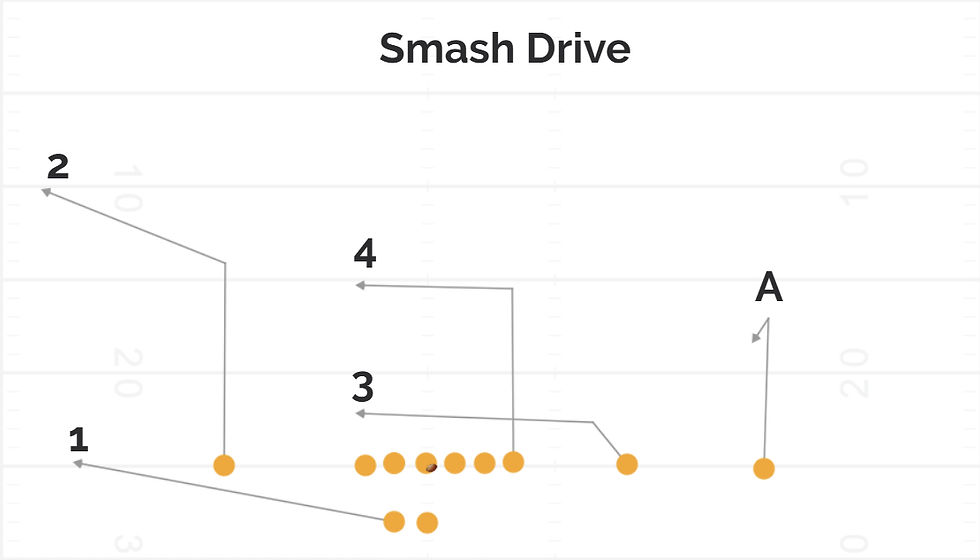


These types of plays were efficient for State as universal winners against any coverage. They are technically full-field reads, but they are easy full-field reads to get through. There's little ambiguity presnap, and I think this quarterback benefits from such a thing. They're also relatively quick, and we frequently saw CJ get to 3 and 4 in these plays.
The effectiveness of these specific concepts declined over the course of the season, and you ended up seeing them a little less over the final four games. State hurt Virginia with these and then systemically disassembled Wake Forest. It used these plays a lot against Virginia Tech, Notre Dame, and Pittsburgh, but to less avail.
Single-Side Concepts
Cutting the field in half, getting your quarterback outside the pocket, and giving him a simple look where he can easily run if it's not there is a good way to build comfort. One of the staples that State would run is the single-side flood play with the boot action. Basically every team in football carries some version of this play. It was one of Bailey's best. As far as routes go, the comeback is one of his best throws, and he hit that repeatedly this year in this concept.


The screen-n-go is also something every team carries and is a natural complement to the screen game. Justin Joly has ran the bluff route like 50 times in the last two years. It's a cheap way to try and steal an explosive and it's a very simple play for the quarterback, who essentially has two reads.


Horizontal Safety Stretchers
State saw a slight decline in the usage of these from a year ago. This where plays like 4 verts, post/wheel concepts, and HOSS plays live. This is where a lot of your downfield passing comes from. They're designed to conflict safeties at the top of the defense, and they're super versatile concepts that can be effective almost anything, but they put more weight on coverage ID from the quarterback. These are the types of plays I most want to see Bailey improve in.


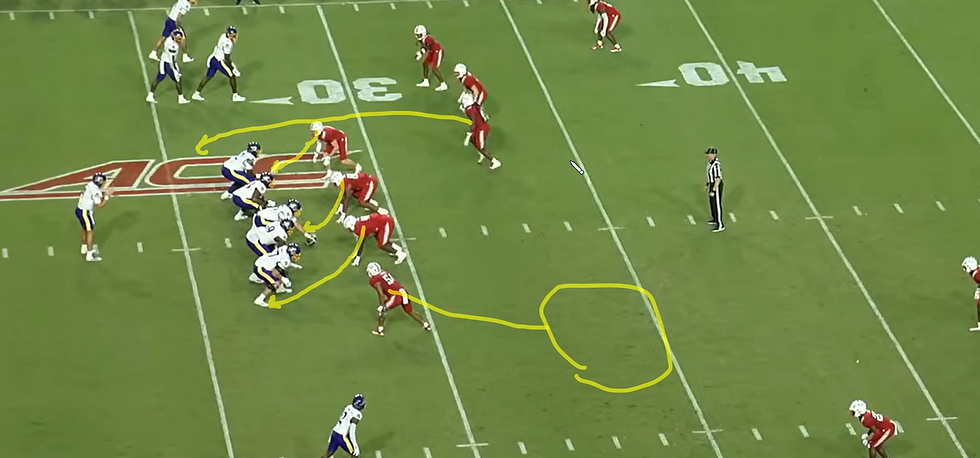
You start to see the value of the pure progression stuff when teams have had success with disguises. Defenses have gotten increasingly good at this kind of thing. All 3 plays above feature some type of disguise. The below one does as well.


The big ask for Bailey next year is to be able to push the ball down the field more and offer more throws like the one above, where he identified a coverage rotation and layered an anticipation throw into the void. These types of window throws require anticipation and decisiveness. This where I think CJ can improve the most.
Double Moves
One of the things I liked about Kurt Roper's first season is how he built plays off other plays, a pretty elementary philosophy that was still a welcome sight. State would take some of the passing concepts above and tag double moves to some of the quick routes within them. You
This below is actually a wrinkle on the Y cross play at the top of the article. Roper had a double move for almost all of the quick routes that were part of these progression concepts he would run.


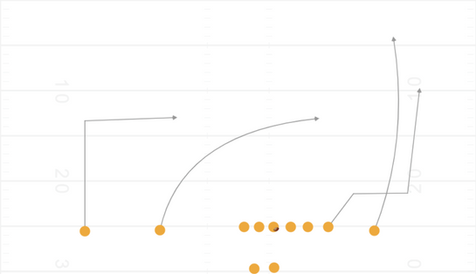

This is a very popular split-field read play called snag lion. It's called that because the left side of the play is a zone-beating quick game concept popularly called snag, and the right side of the play is a double slant or two quick in breakers, commonly called a lion concept. It's a split-field coverage read because the quarterback is picking a side based on the coverage. Below, you can see the snag lion play side-by-side with the version that features a double move on the man side.


If you enjoy this kind of analysis, join Trinity Road Times for free and receive emails whenever new content is published.
Also check out the Trinity Road Times Member Chat, our premium message board that costs just $3 a month and includes all sorts of additional features.


Comments