.png)
Three Key Scheme Elements that Helped State Beat SMU
- AlecLower

- Feb 5
- 5 min read
NC State's 84-83 win over SMU is immediately one of my favorite basketball games in recent memory. The shot making from both teams hit an extreme, and there isn't much more entertaining than watching your team get on an absolute heater and beat a good team on the road. Because I'm a huge nerd, a number of adjustments and key schematic wins stood out from the second half rally and eventual close. Let's take a look at a key defensive adjustment and two key offensive sets that helped State clear the Mustangs.
I thought State’s defense improved in the second half, even as it gave up about the same number of points. The Pack was able to string together stops that eventually helped fuel a 21-4 run. The main reason is that it offered up fewer breakdowns. Defensive breakdowns were kind of the story on that end of the court in the first half.
State debuted a new ball screen coverage against SMU. The primary defensive scheme all year has been the one-through-five switching, and Wade has used the hedge as a secondary option to cover ball screens, particularly when the matchups pose serious issues. State played drop coverage on 1-5 ball screens for the first time all year.
The guards had issues getting over some of the enormous screens from 7’2 Samet Yigitoglu. When you play drop coverage, you have to get over the screen and chase the ball off the perimeter, because the big has to stay in contact with the rolling offensive big. State gave up two threes off the dribble because the guard got stuck on the screen.
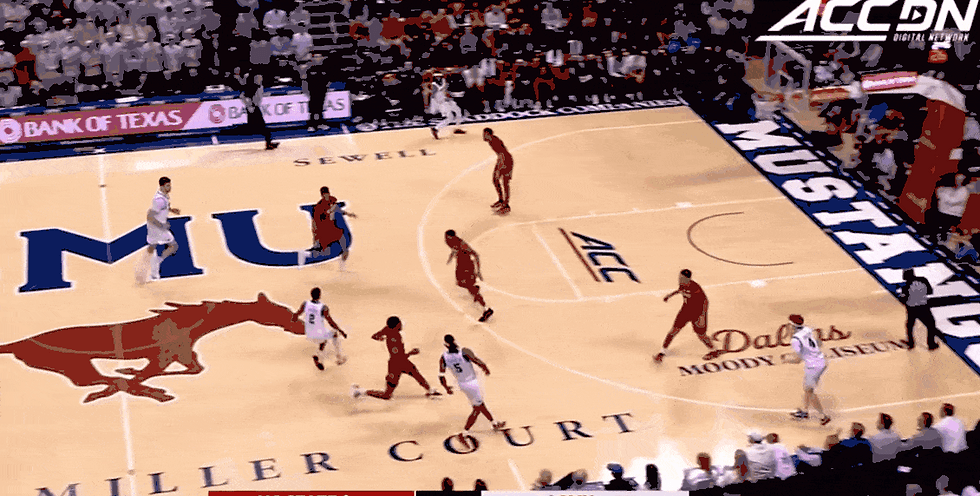

State got out of this in the second half, returning to hedging and switching screens primarily. Sagnia was good once again as a switch defender, and SMU had to work a little harder for points. The Mustangs still scored plenty of them because that offense is elite, but when State's rotations were good, it did force SMU to earn more. I didn't think this was a great defensive game, but you're going to have that sometimes. Inconsistent defense is just a part of this team. They made the right adjustments and I thought State contested shots at the rim well later in the game. The final note on the defense is just to give Tre Holloman flowers for handling Boopie Miller on that last possession. That was big time.
Speaking of the offense, Darrion Williams absolutely blew up from beyond the arc in Dallas, and his timely makes were a big reason State didn’t lose. He got several of them from some simplistic roll-replace style actions. With SMU hedging the ball screens, Wade and staff were able to manufacture some looks with the below play. Let's take a look.


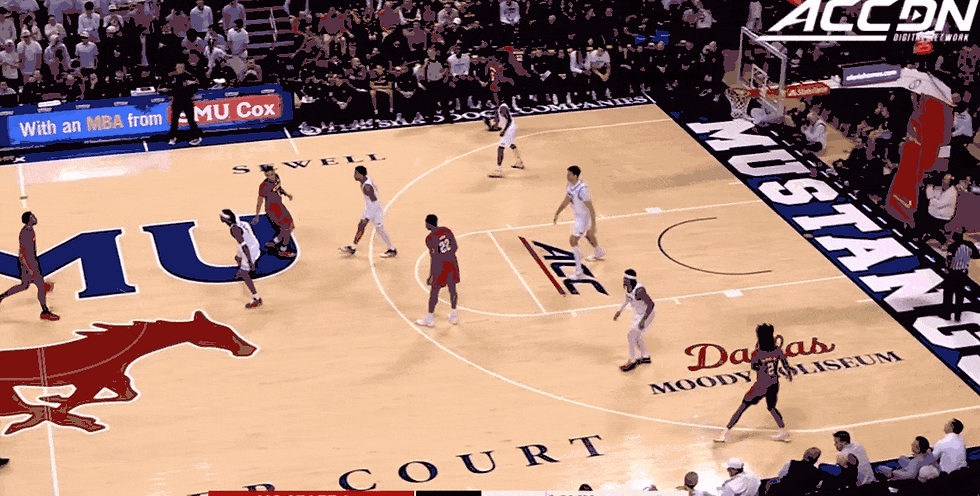
This is a staple of most playbooks when you're seeing hedges from the defense. Keatts was a heavy user of it as well, although the location of the shooter is different here.
Later in the second half, State started spamming one of its go-to actions lately, the 1-2 ghost action. This has always been a piece of the offense, but its volume lately has really increased. It was the closer in the Pitt game and it was the closer again in Dallas.
This is a great play for Copeland, who is really difficult to contain in space. It can get you a three from the actual ghost action, but more often it can create a switch and/or a ton of space to attack the paint. With a strong shooter in the strong corner, it can be tough to defend.


Here it is in action.


If you enjoy this kind of analysis, join Trinity Road Times for free and receive emails whenever new content is published.
Also check out the Trinity Road Times Member Chat, our premium message board that costs just $3 a month and includes all sorts of additional features.


Comments